
Shopkick is one of the more creative players in the rewards and loyalty space. Instead of focusing only on online cashback, it connects the dots between in-store visits, product engagement, and digital offers.
The Shopkick business model combines affiliate marketing, retail analytics, gamified engagement, and mobile advertising to drive measurable value for both users and brands. It’s a hybrid between a shopping assistant and a rewards app — and it has paid off.
What Is Shopkick? #
Founded in 2009 in Redwood City, California, Shopkick rewards users not just for purchases but for walking into stores, scanning barcodes, and browsing products. Users earn “kicks” — the platform’s virtual points — which they can later redeem for gift cards.
The company was acquired by Trax Retail, a retail data-analytics company, in 2019, giving it access to advanced AI-based retail insights.
Today, Shopkick’s ecosystem includes major partners like Target, Walmart, Best Buy, and TJ Maxx, and it continues to expand globally.
Key Metrics and Snapshot #
| Metric | Value / Detail |
| Founded | 2009 |
| Headquarters | Redwood City, California, USA |
| Acquired By | Trax Retail (2019) |
| Active Users | Over 10 million |
| Partner Stores | 250+ national retailers and brands |
| Points Redeemed by Users | Over $100 million worth of gift cards distributed |
| Revenue Model | Retail partnerships, brand promotions, and advertising fees |
These figures reflect how well the Shopkick business model integrates retail engagement with measurable marketing outcomes.
How the Shopkick Business Model Works #
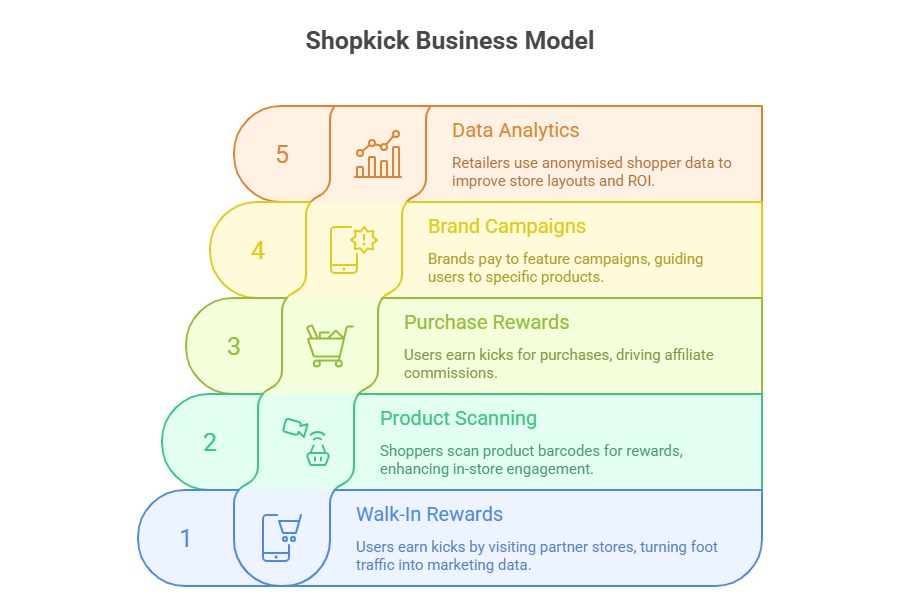
The Shopkick business model is built around four engagement layers: walk-in rewards, product scanning, purchase tracking, and online shopping.
- Walk-In Rewards
Users earn kicks simply by visiting partner stores. Shopkick’s app detects user proximity through Bluetooth beacons or GPS and rewards them instantly. This turns foot traffic into trackable marketing data.
- Product Scanning and Discovery
The app encourages shoppers to scan product barcodes — rewarding them for discovery, even without purchase. Brands benefit from higher in-store engagement and visibility.
- Purchase Rewards and eCommerce Integration
Users link loyalty or payment cards to earn kicks for completed transactions, both in-store and online. Each verified purchase triggers affiliate commissions for Shopkick. This is the backbone of the Shopkick business model, where consumer actions drive brand payments.
- Brand Campaigns and Promotions
Brands pay Shopkick to feature campaigns that guide users toward specific products or aisles. This performance-based ad structure combines digital engagement with physical-store behaviour — a rare strength in the loyalty space.
- Data Analytics and Retail Insights
Through its parent company, Trax, Shopkick provides anonymised analytics on shopper behaviour. Retailers use this to measure campaign ROI, understand dwell time, and improve store layouts.
Together, these mechanisms make the Shopkick business model a data-rich ecosystem that connects mobile activity with real-world retail outcomes.
How Does Shopkick Make Money #
| Revenue Stream | Description | Nature of Income |
| Brand Advertising | Brands pay for visibility, product-scanning missions, and in-store promotions. | High-margin, campaign-based |
| Affiliate Commissions | Shopkick earns on verified purchases via partner links or loyalty programs. | Recurring, performance-based |
| Retail Data Licensing | Insights from user activity are sold to retail partners and agencies. | Strategic, B2B |
| White-Label Integrations | Shopkick’s engagement model is licensed to retailers for private-label apps. | Recurring, SaaS-style |
| Cashback Margin | Profit from the difference between brand payout and user rewards. | Direct margin |
Each layer reinforces the Shopkick business model — a blend of engagement marketing and measurable performance data that benefits both sides of the retail equation.
Why the Shopkick Business Model Works #
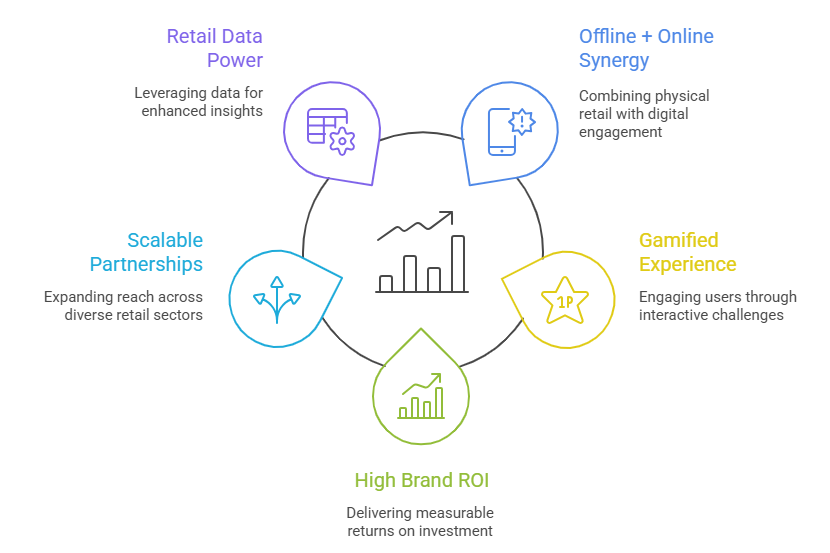
- Offline + Online Synergy: Shopkick merges real-world retail with digital gamification — giving brands insights beyond website clicks.
- Gamified Experience: Users enjoy scanning and earning kicks; engagement doesn’t feel transactional.
- High Brand ROI: Campaigns directly correlate to verified store visits and purchases.
- Scalable Partnerships: From grocery chains to electronics stores, Shopkick works across verticals.
- Retail Data Power: The integration with Trax makes the platform a retail-data powerhouse, not just a loyalty app.
This approach is what keeps the Shopkick business model relevant in a crowded loyalty-tech market.
Build a Shopkick-Like Platform with a Shopkick Clone #
If you’re planning to launch your own location-based rewards or retail-engagement app, developing a Shopkick clone is the smartest route. It lets you replicate proven features of Shopkick while customising them for your market.
At EnactSoft, we’ve helped 350+ affiliates launch more than 500+ coupon, cashback, and rewards platforms across 65+ countries, using scalable, automated systems. Our Shopkick clone solution helps businesses go live fast with all essential integrations.
Here’s what our solution will include:
- Beacon & GPS tracking modules to reward store visits and dwell time.
- Barcode scanning and product-interaction workflows for brand visibility.
- Affiliate and loyalty card integrations to track verified purchases.
- Retail dashboards and analytics for real-time campaign measurement.
- Gamified UI and reward-redemption systems that keep users engaged.
A well-built Shopkick clone allows you to capture both online and offline traffic, build stronger retail partnerships, and generate revenue from data and engagement.
Connect with our team today and get more details on our affiliate solutions
Conclusion #
The Shopkick proves that loyalty doesn’t have to be boring. By blending rewards, data, and gamification, Shopkick made shopping feel like a game — one where every visit and scan adds measurable value to brands.
It’s a brilliant balance between consumer psychology and performance marketing. If you’re looking to build something similar, investing in a Shopkick clone gives you the foundation to enter the loyalty space fast — complete with automation, analytics, and flexibility for your niche.
The future of engagement belongs to businesses that can connect data, behaviour, and incentives — exactly what Shopkick does best.
FAQs #
What is Shopkick and how does it make money? #
Shopkick is a mobile rewards app that pays users for walking into stores, scanning items, and shopping. The shopkick business model earns revenue from brand promotions, affiliate sales, and retail-data partnerships.
How does the Shopkick business model differ from cashback apps? #
Unlike traditional cashback platforms, the shopkick business model rewards user actions beyond purchases — such as store visits and scans — giving brands broader engagement metrics.
Can businesses build their own Shopkick-style platform? #
Yes. With a Shopkick clone, companies can launch apps that reward user engagement in both online and offline environments, featuring beacon tracking and branded reward systems.
What does a Shopkick Clone include? #
A shopkick clone includes beacon integration, barcode scanning, loyalty card linking, and analytics dashboards — mirroring Shopkick’s tech stack while being fully customizable.
Why is the Shopkick business model still relevant today? #
The Shopkick business model combines verified offline engagement with real consumer data — something few digital ad platforms can offer. It bridges the gap between mobile experience and in-store reality, making it valuable even in 2025.


